

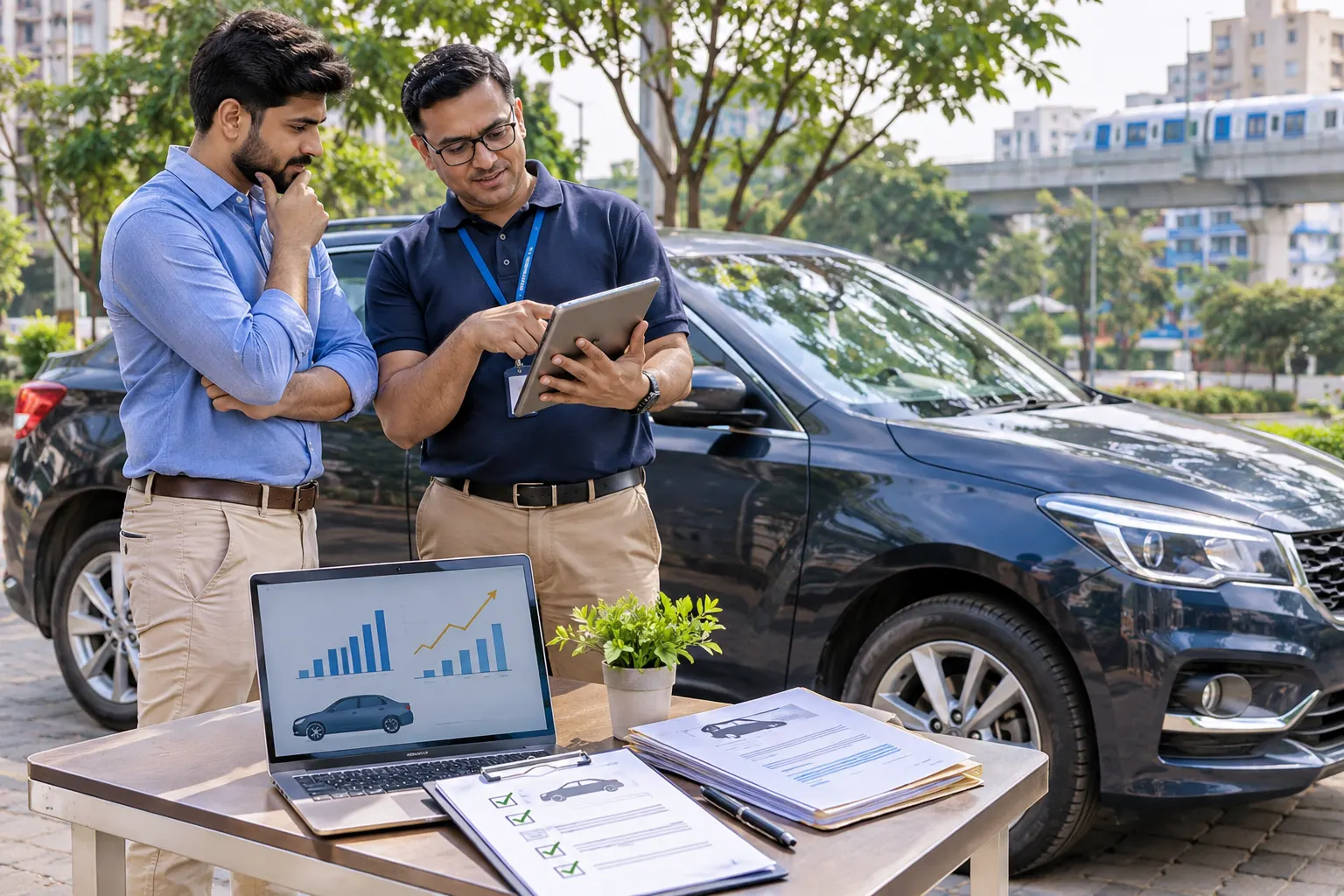
How to Determine the Right Resale Value of Your Used Car in India
Buying a used car can be a practical way to own a vehicle without spending as much as you would on a brand-new model. With numerous second-hand cars available across India, buyers can explore different brands, models, and price ranges. However, purchasing a pre-owned car requires careful evaluation to avoid unexpected repair costs, documentation problems, and poor resale value.
Whether you are purchasing your first vehicle or upgrading to another model, understanding what to inspect can help you make a confident decision.
1. Check the Vehicle's Overall Condition
Start by examining the exterior and interior of the vehicle. Look for dents, scratches, rust, uneven paintwork, and signs of previous repairs. Inspect the seats, dashboard, air conditioning, windows, and electronic features.
Minor cosmetic damage may be manageable, but structural damage or extensive repairs deserve closer investigation.
2. Verify the Registration Certificate
The Registration Certificate (RC) is one of the most important documents when buying a used car in India.
Confirm that the registration number, chassis number, engine number, and owner's details match the vehicle and seller's documents.
Also, verify the registration status through the official Parivahan portal or relevant transport authority.
3. Review the Service History
A vehicle's maintenance history can reveal how well it has been cared for.
Check available service records for regular oil changes, brake maintenance, tyre replacement, and major mechanical repairs.
A complete service history is useful, although it does not guarantee that the vehicle is free from problems.
4. Inspect the Engine and Transmission
The engine and transmission are among the most expensive components to repair.
Listen for unusual sounds, check for visible leaks, and observe how the engine starts and idles. During a test drive, pay attention to gear changes, acceleration, and vibrations.
Consider arranging an independent mechanic's inspection before finalizing the purchase.
5. Check the Odometer Reading
Mileage helps buyers estimate vehicle usage, but it should never be the only factor influencing a purchase.
Compare the odometer reading with service records, previous inspection reports, and the vehicle's overall wear.
Unusual inconsistencies may indicate that further verification is necessary.
6. Examine the Tyres, Brakes, and Suspension
Check tyre tread depth, uneven wear, and tyre manufacturing dates. During the test drive, observe whether the vehicle pulls to one side or produces unusual noises over bumps.
Brakes should respond consistently without excessive vibration or grinding sounds.
7. Verify Insurance and Accident History
Review the current insurance policy, including its validity and coverage.
Ask the seller about previous accidents, insurance claims, and significant repairs. Where available, review supporting records.
A professional inspection can help identify signs of structural damage that may not be obvious during a visual examination.
8. Compare Used Car Prices
Before making an offer, compare similar used cars based on model year, variant, mileage, ownership history, condition, and location.
A vehicle priced significantly below comparable listings deserves additional scrutiny.
On Car4Deal, buyers can explore pre-owned car listings and compare options according to their requirements.
9. Take a Proper Test Drive
A short drive around a parking area is rarely sufficient.
Test the vehicle on suitable city roads and, where permitted, at different speeds. Check steering response, braking, transmission performance, visibility, and ride comfort.
Ensure that the vehicle feels stable and operates without unusual warning lights.
10. Complete the Ownership Transfer Correctly
Before making the final payment, verify the seller's identity and check for outstanding loans, hypothecation, or other restrictions.
Ensure that the required ownership-transfer documentation is submitted to the appropriate Regional Transport Office (RTO).
Keep copies of payment receipts, sale documents, and transfer acknowledgements.
Conclusion
Buying a used car in India can offer excellent value when you carefully examine the vehicle's condition, history, price, and documentation. Avoid rushing into a purchase based only on appearance or an attractive asking price.
Explore used cars on Car4Deal to compare available pre-owned vehicles and find an option that suits your needs and budget.